Buy Gold Info

Gold Scrap Value Calculator

With this gold scrap value calculator, you can quickly determine the value of your gold based on current prices, so you get a fair offer on your trade-in.

Gold Scrap Value Calculator

Gold Scrap Value Calculator

Estimate the melt value and likely buyer offer for gold jewelry, coins, chains, rings, bracelets, dental gold, and scrap gold.

Current gold spot price $4,484.10 Per troy ounce, USD. Last updated: June 4, 2026 10:00 am

Your Gold Items

Add one or more items. Use a jewelry scale when possible for the most accurate estimate.

Estimated buyer offer — Based on your selected payout percentage.
Total melt value — Estimated full metal value before buyer margin.
Total gold weight — Converted to grams.
Pure gold content — Estimated actual gold content.

Estimated Offer Ranges

Low offer — 60% of melt value
Fair offer — 75% of melt value
Strong offer — 85% of melt value
Near melt — 90% of melt value
Enter your gold details

The calculator will estimate melt value, buyer payout, and whether a received offer looks low, fair, or strong.

Item Breakdown

Item Karat / Purity Weight Melt Value Buyer Estimate

This tool provides educational estimates only. Actual offers may vary based on gold testing, item condition, stones, non-gold parts, dealer margin, refining fees, and local market demand.

How the Gold Scrap Value Calculator Works

This calculator helps you get a rough idea of what your gold is worth before you walk into a pawn shop, jeweler, or cash-for-gold buyer. It’s not a guarantee, but it can give you a number to work with, which is much better than going in blind.

The calculator pulls the current gold spot price and adjusts it based on your item’s karat and weight. Those two things matter so you know the difference between a bad offer and a good one.

What You Need to Enter

**Karat.** This tells the calculator how much actual gold is in your piece. You can usually find it stamped somewhere on the item. A ring might say “14K,” “585,” or “750.” If you’re not sure, a jeweler can test it for a few dollars.

**Weight.** A digital jewelry scale gives the most accurate result. The calculator works in grams, pennyweight, troy ounces, and regular ounces, so use whatever you have.

**Buyer payout percentage.** This is how much of the estimated melt value a buyer might actually offer you. More on that below.

Why Karat Changes the Value

Gold jewelry isn’t always pure gold. It can be mixed with other metals to make it harder and more durable. That’s why a 14K chain and a 24K chain of the same weight aren’t worth the same thing.

Here’s the basic breakdown:

| Karat | Approximate Gold Purity |
|——-|————————–|
| 10K | 41.7% gold |
| 14K | 58.3% gold |
| 18K | 75% gold |
| 22K | 91.7% gold |
| 24K | 99.9% gold |

Two items, same weight. The one with a higher karat contains more gold. It’s worth more. Simple as that.

What Is Melt Value?

Melt value is what the gold inside your item is worth, not the item itself.

So if you’ve got a 14K bracelet, the calculator doesn’t treat the whole thing as pure gold. It figures out how much gold is actually in there based on the karat, then multiplies that by the current spot price.

That number is your melt value. Think of it as your baseline. It tells you what the raw material is worth, before anyone takes a cut.

Why Buyers Usually Pay Less Than Melt Value

Most gold buyers won’t pay you full melt value. That’s not automatically a scam. There are real costs involved: testing the gold, removing stones or clasps, refining or reselling, and keeping the lights on.

A payout somewhere between 70% and 85% of melt value is pretty common for scrap gold. But it varies a lot depending on the buyer, what you’re selling, where you are, and current demand.

The buyer payout field in the calculator lets you model this. If a buyer offers 75% of melt value and another offers 85%, the difference on a $600 item is $60 in your pocket. Worth knowing before you decide.

How to Use the Offer Checker

Already have a quote? Enter it into the calculator.

The tool will compare that offer to the estimated melt value and give you a sense of where it lands.

For example, if your gold has an estimated melt value of $500 and someone offers $250, that’s 50%. That’s on the low end. If they offer $400, that’s 80%. That’s more competitive.

It doesn’t tell you whether to take the deal. But it gives you a way to evaluate it instead of just guessing.

## What Types of Gold Can You Estimate?

Pretty much anything solid gold:

– Rings, chains, bracelets, necklaces
– Broken or tangled jewelry
– Single earrings and charms
– Dental gold
– Gold coins
– Scrap gold lots

One thing to watch: if your item has diamonds, gemstones, watch components, or non-gold parts, the estimate gets less precise. The calculator assumes the weight you enter is all gold-bearing material. If it’s not, adjust accordingly.

Tips Before You Sell

Weigh your gold first. Knowing the weight ahead of time puts you in a much better position before any conversation starts.

Check the karat stamp carefully. Markings like “GP,” “GF,” or “HGE” mean gold plated or gold filled, not solid gold. Those are worth a lot less.

Get more than one quote. Even a few percentage points difference in payout can add up, especially on heavier pieces.

Ask the buyer directly: “What percentage of melt value are you paying?” A reputable buyer should be able to answer that without hesitation.

A Quick Note on Accuracy

This calculator gives you an estimate, not a final number. The amount you actually receive depends on the buyer, how they test the gold, the condition of the item, any non-gold parts, refining fees, and where the market sits that day.

Use it as a starting point. Walk in knowing roughly what you’ve got. That alone puts you in a better position than most people who show up without any idea.
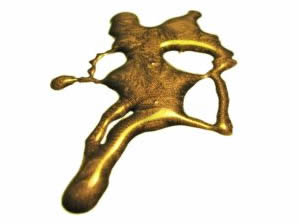
Scrap Gold

Have you ever considered selling your scrap gold for cash? Now that there is widespread unemployment and very little improvement in our economy, most people are looking for ways in which they can get cash, and one of those ways is by selling scrap gold.  The amount of these unwanted and broken gold items usually exceeded the expectations of past owners and they are usually surprised with how much their old gold can be worth.  Scrap gold can come in a variety of forms, and sometimes you may find it in unexpected places or objects such as your computer or cell phone.  Although not all gold refiners accept all types of precious metal scrap, it would do you a lot of good to learn what scrap gold is and where you may get it in your belongings.  They are good sources of financial aid when you need them.

Any product that contains gold can be a source of gold scrap.  This includes gold in your jewelry, coins, bars, flatware, and appliances at home. The best types are those old and broken jewelries which cannot be restored to their former looks without incurring a lot of expenses in the process.  They contain a lot of recoverable gold that will fetch a good price in the market.  When it would not do you any good to send the item for repair, it will do best to sell them as scrap gold.  They will be valued for their gold content with a small reduction for a particular fee that the refiner may charge upon you.

When you sell gold as scrap, you will not be getting the face value of your gold – the original price for the item or its aesthetic or historic value.  What the refiner will pay you would be for the weight and the karat of the gold.  So what would matter is how pure your gold item is.  It varies from 24 karats to 10 or 8 karats at least, which will determine the actual amount of gold that is present in the mixture.

To get an idea of where you can get scrap gold here are some examples:  broken jewelries, bracelets, rings, chains, old dented gold coins, pins, gold wires, gold dust, computer parts, connectors, and circuits. Another popular source of gold items are in many different forms of dental gold scrap such as gold fillings, dental crowns and bridges,   These are all considered to be scrap gold and you can bring them to a refiner to know if they buy such items.

By selling scrap gold, you are getting an investment that can be greater than what you paid for the item originally.  As gold tends to increase in value as the economy slows down, you can expect it to be worth more than when you bought the item.  Selling scrap gold will definitely provide you with profits without the hassle.  However, you should sell them to a good buyer that will give you more percentage for the value of the scrap.  You should at least know how much the current market rate is for gold and then compare that with what your item could cost.  You should at least know the weight and karat of your gold to do this.

Refining Scrap Gold

The process of refining scrap gold involves the removal of base or other heavy metals from the scrap gold and also removing impurities from it.  A lot of businesses have grown due to the demand for gold and they have found refining as a way of supplying that need for gold.  This process aids the supply for gold without having to mine them from the earth and all the risks that entail this process.  Aside from that, it also eliminates the costly production expenses of mining gold and also provides a way to make up for the gradually lessening sources for gold.  Miners have also been endangered with mining and so this is a great way to avoid that.  Environmental issues have also arisen from gold mining.  But the most benefit that can be taken from it would be that it also supplies instant cash for those who have scrap gold but are short in cash.
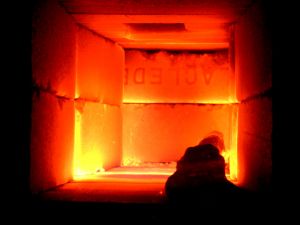
With the price of gold going up, a lot of gold refiners have now gotten into the business of buying scrap gold to refine them.  Refining can be done in a number of ways that would involve either the use of harsh chemicals, electrolysis, and heating metals in ultra-high temperatures.   With the nature of this process, only professionals can be relied on to do the job.  Any small mistake in the process can result to disaster.  The process also gives by-products of toxic wastes and gases which can endanger health and the environment if mishandled or disposed of improperly.  So, it is not recommended that one should do it in his own home and improvise.  The various procedures done can also depend upon the type of scrap gold that you are dealing with: if you have lower karats of gold, you can only use a particular process as it is the best way to eliminate the other base metals from the mixture. You can also choose the kind of procedure to use if you are aiming for a higher karat or purity of gold.  The process can also differ depending on the amount of gold that you are dealing with – either large-scale or small-scale, there are varying processes for it.

Some of the procedures that are used in refining are the Miller process, which yields a 99.5 karat of gold; the Wolhwill process which uses electrolysis; cupellation, which involves heating scrap gold to a thousand degrees Celsius; and the use of Aqua Regia which involves nitric and hydrochloric acids but yields a 99.99 karat of gold.   Some of the procedures used for large-scale refining such as the Wohlwill and the Aqua Regia method; whereas those that are used for small-scale refining are cupellation and inquartation. With these refining processes, one can save from the costs of acquiring gold by mining.

[ad name=”Content”]

Refining scrap gold can definitely be a way which we can avoid the more serious threats that gold mining imposes on our planet and in people’s lives.  It has been said to be affecting the environment as it destroys the plants and trees in the process as well as be a cause for frequent flooding and erosion of the arable soil.

Gold Refining

Gold refining is the process that is used in order to remove impurities from scrap gold or from smelt gold.  This is the stage where gold is extracted in its pure form and other base metals or chemicals removed from the mixture.  There are different procedures that are used by refineries in getting gold at its purest form and they may vary depending on the type of the raw material or the available resources that the refiner can use.  Some of these processes involve the use of chemicals that have serious effects on either a person’s health or pollute the surrounding environment.  Hence, refining is recommended to be done only by professionals and those who have technical expertise in the method.

There are different methods of refining gold: cupellation, inquartation, the Miller procedure, the Wohlwill process, and refining through the use of the Aqua Regia.  They all involve different types of materials and processes and the karat of the gold they produce also vary.

In cupellation, the process involves the addition of lead to gold and then heating the mixture to 1000 degrees Celsius in order to dissolve other metals in the lead.  This is practicable for smaller amounts of gold to be refined but may be a health hazard due to the emission of lead oxide fumes which are toxic to human health.

Inquartation and parting involves an addition of lead and copper minerals in order to reduce the percentage of gold in the total volume.  After this, the mixture is dissolved in a nitric acid solution. The lower percentage makes it possible for the other base and precious metals present to be dissolved more properly in the acid.  This process is ideal when refining lower karats of scrap gold.

The Miller procedure is one of the oldest, fastest, and simplest procedures of refining gold hence making it widely used by different refineries.  The process involves blowing chlorine in gas form to melted gold.  The impurities or other metals in gold combine with the chlorine gas leaving a layer of them in the surface of the liquid gold.  The gold produced has 99.5 purity.  Health hazards are involved due to the chlorine gas which is highly toxic. The Wohlwill process uses an electrolyte solution composed of hydrochloric.  When electricity passes through the solution, gold deposits on the cathode and the other base metals are removed.  This process involves a lot of time and is widely used in large-scale refining.

[ad name=”Content”]

Using Aqua Regia in refining entails the use of a solution containing hydrochloric acid and nitric acid in a certain composition.  Gold is dissolved in the solution forming gold chloride.  After this, it is precipitated in order to extract the pure gold.  The dangers that may be involved are the inhalation of nitrogen oxide fumes and the injuries that may result from the contact with the acids that are involved.  This process yields 99.99 pure gold and is used in refining higher karats of gold in large-scale refineries.

  • Gold Buyers By State
  • Gold Price Per Gram
  • Current Gold Rate
  • Gold Scrap Value Calculator

Live Gold Price

Today’s Gold Price

Current spot price and estimated 10K, 14K, and 18K gold values per gram.

Gold Spot Price $4,482.90 Per troy ounce, USD
24-Hour Change +$44.40 (+1.00%) Compared with the closest stored price from about 24 hours ago.
10K Gold $60.05 Estimated melt value per gram
14K Gold $84.08 Estimated melt value per gram
18K Gold $108.10 Estimated melt value per gram
Last updated: June 4, 2026 9:54 am
Local gold buyers usually pay less than melt value.

Categories

  • Buy Gold Coins
  • Buying Gold
  • Dental Gold Scrap
  • Digital Currency
  • ETF Funds
  • Gold Book
  • Gold Buyers in Alabama
  • Gold Buyers in Alaska
  • Gold Buyers in Arizona
  • Gold Buyers in Arkansas
  • Gold Buyers in California
  • Gold Buyers in Colorado
  • Gold Buyers in Connecticut
  • Gold Buyers in Delaware
  • Gold Buyers in Florida
  • Gold Buyers in Georgia
  • Gold Buyers in Hawaii
  • Gold Buyers in Idaho
  • Gold Buyers in Illinois
  • Gold Buyers in Indiana
  • Gold Buyers in Iowa
  • Gold Buyers in Kansas
  • Gold Buyers in Kentucky
  • Gold Buyers in Louisiana
  • Gold Buyers in Maine
  • Gold Buyers in Maryland
  • Gold Buyers in Massachusetts
  • Gold Buyers in Michigan
  • Gold Buyers in Minnesota
  • Gold Buyers in Mississippi
  • Gold Buyers in Missouri
  • Gold Buyers in Montana
  • Gold Buyers in Nebraska
  • Gold Buyers in Nevada
  • Gold Buyers in New Hampshire
  • Gold Buyers in New Jersey
  • Gold Buyers in New Mexico
  • Gold Buyers in New York
  • Gold Buyers in North Carolina
  • Gold Buyers in North Dakota
  • Gold Buyers in Ohio
  • Gold Buyers in Oklahoma
  • Gold Buyers in Oregon
  • Gold Buyers in Pennsylvania
  • Gold Buyers in Rhode Island
  • Gold Buyers in South Carolina
  • Gold Buyers in South Dakota
  • Gold Buyers in Tennessee
  • Gold Buyers in Texas
  • Gold Buyers in Utah
  • Gold Buyers in Vermont
  • Gold Buyers in Virginia
  • Gold Buyers in Washington
  • Gold Buyers in Washington DC
  • Gold Buyers in West Virginia
  • Gold Buyers in Wisconsin
  • Gold Buyers in Wyoming
  • Gold Calculators
  • Gold Coins
  • Gold Commodity
  • Gold Futures
  • Gold Investing
  • Gold Mutual Funds
  • Gold Price
  • Gold Stock Investing
  • Online Gold Trading
  • Price of Gold
  • Scrap Gold
  • Selling Gold
  • Uncategorized
  • World Currency

Recent Posts

  • Gold Scrap Value Calculator
  • Gold Buyers in Wyoming
  • Gold Buyers in Green River, Wyoming
  • Gold Buyers in Sheridan, Wyoming
  • Gold Buyers in Rock Springs, Wyoming
  • Gold Buyers in Gillette, Wyoming
  • Gold Buyers in Laramie, Wyoming
  • Gold Buyers in Casper, Wyoming
  • Gold Buyers in Cheyenne, Wyoming
  • Gold Buyers in Wisconsin